Multiple-choice questions

“Clinical Biochemistry: Fatty Acid Metabolism, Ketogenesis, and Energy Regulation”

“Discover key insights into fatty acid metabolism, ketogenesis, and triglyceride synthesis through clinical scenarios. This guide explains enzyme deficiencies like MCAD, hormonal regulation by insulin, and the role of beta-oxidation and omega oxidation pathways in energy production.”

“Clinical Biochemistry: Fatty Acid Metabolism, Ketogenesis, and Energy Regulation” Read More »
Fatty acid metabolism – Case-based multiple-choice questions-set 2

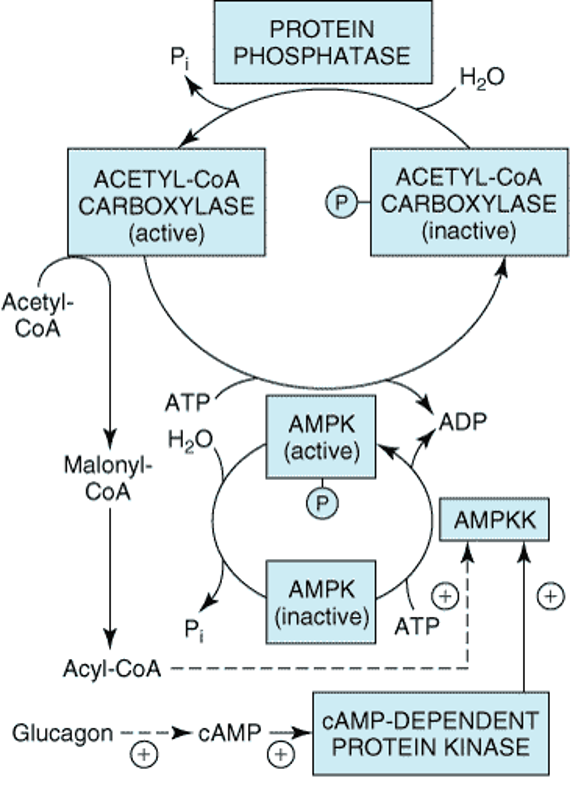
1. A 45-year-old patient presents to the clinic with significant weight loss and fatigue. Blood tests reveal elevated levels of epinephrine and glucagon. Given this clinical context, when these hormones bind to receptors on the adipose cell membrane, which of the following is NOT expected to occur? A. Fatty acids are activated, enter the mitochondria,

Fatty acid metabolism – Case-based multiple-choice questions-set 2 Read More »

Fatty acid and Triglyceride synthesis- Case-based multiple-choice questions

1. Which of the following TCA cycle intermediates plays a crucial role in de novo fatty acid synthesis by providing substrate and positively regulating the rate-limiting enzyme involved in fatty acid synthesis? A. Citrate B. Isocitrate C. Malate D. Oxaloacetate E. Succinate   Correct Answer: A. Citrate. Citrate plays a crucial role in de novo

Fatty acid and Triglyceride synthesis- Case-based multiple-choice questions Read More »

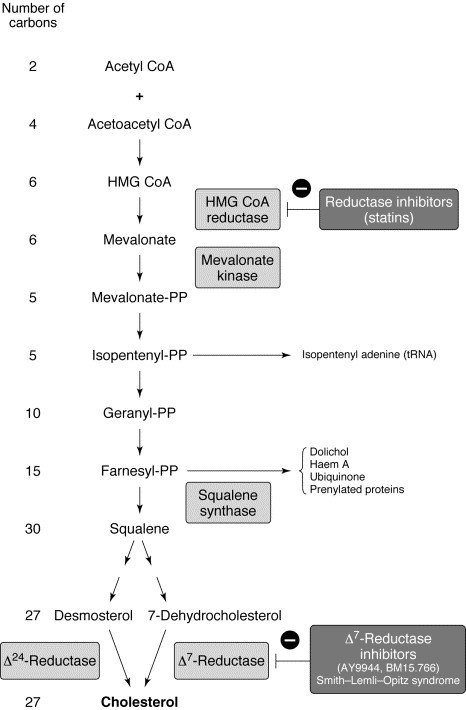
The reaction catalyzed by HMG Co-A Reductase

Case Details A 40-year-old man presents with chest pain that radiates to his left jaw and shoulder. He is diagnosed with a myocardial infarct (heart attack) and is prescribed statin medication. Statins are competitive inhibitors of HMG CoA reductase, which converts HMG Co A to which of the following? Isopentenyl pyrophosphate Mevalonate Geranyl pyrophosphate Farnesyl

The reaction catalyzed by HMG Co-A Reductase Read More »

Question of the week

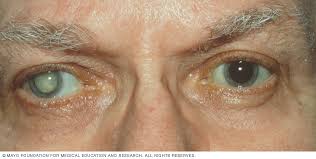
Case details A 54- year-old man with Type 1 diabetes is referred to an ophthalmologist for evaluation of developing cataracts. Blood chemistry results are shown below: Fasting blood glucose   198 mg/dl Hemoglobin A                  15 gm/dl Hemoglobin A1c             10% of total Hb Urine ketones                   Positive Urine glucose                    Positive Which of the following enzymes is most strongly

Question of the week Read More »

Elevated Acyl carnitine compounds and associated hypoglycemia- What is the defect?

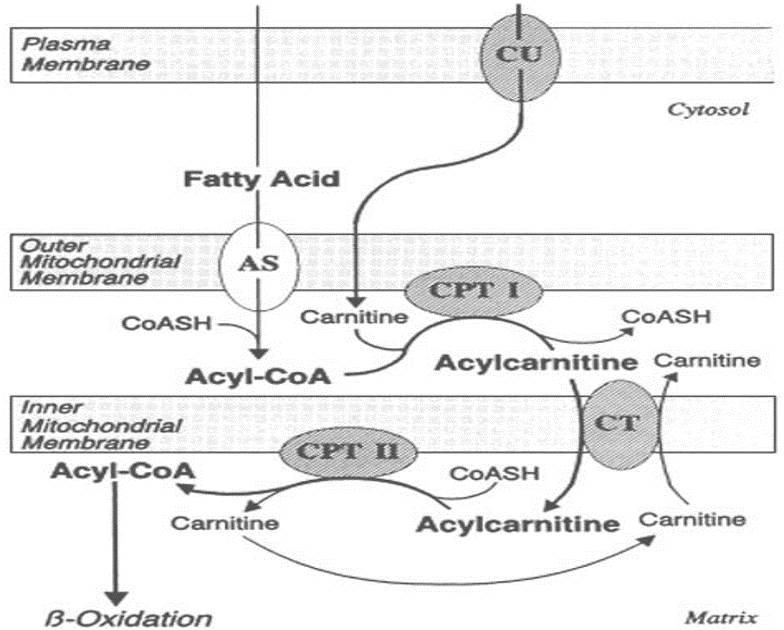
Case details  A 5- year-old boy suffered gastroenteritis for two days and was brought to the emergency in a semiconscious state. Blood glucose at the time of admission was 45 mg/dl and his urine was negative for glucose and ketone bodies. Glucose was administered intravenously, and his condition improved within 10 minutes. Subsequent laboratory investigations

Elevated Acyl carnitine compounds and associated hypoglycemia- What is the defect? Read More »

Lipids- Multiple-choice questions-set-3

1. Which of the following are the ketone bodies? a) Acetyl CoA and Propionyl CoA b) Lecithin and Lysolecithin c) Acetoacetate and Beta-hydroxybutyrate d) Pyruvate and lactate e) Succinyl CoA and succinate 2. The enzyme ‘Thiolase’ catalyzes the conversion of: a) 2 Acetyl CoA to Acetoacetyl CoA b) Acetyl CoA to Malonyl CoA c) Fatty

Lipids- Multiple-choice questions-set-3 Read More »

Fatty Acid Metabolism- Multiple-Choice Questions (Solved)-set-4

Q.1- Glucose can be converted to glycerol-3-P through which of the following intermediates? a) Glycerol b) Dihydroxyacetone phosphate c) Acetyl CoA d) Pyruvate e) Malate. Q.2- Which of the following supplies the 2 carbon units that are added to the elongation of the fatty acid chain? a) Acetyl CoA b) Malonyl CoA c) β- Keto

Fatty Acid Metabolism- Multiple-Choice Questions (Solved)-set-4 Read More »

Cholesterol-chemistry and metabolism- Multiple-choice questions

1)- Cholesterol is a precursor of all of the following except- a) Taurocholate b) Glycocholate c) Calcitriol d) Corticosteroids e) Calcitonin. 2)- All 27 carbon atoms of cholesterol are derived from- a) Acetyl CoA b) Acetoacetyl CoA c) Propionyl CoA d) Succinyl CoA e) Malonyl CoA 3)- Cytosolic  3-hydroxy-3-methylglutaryl CoA (HMG CoA) is reduced to

Cholesterol-chemistry and metabolism- Multiple-choice questions Read More »

Cholesterol metabolism- Multiple-choice questions

Q.1 – A gall stone that blocked the upper part of the bile duct would cause an increase in which of the following? a) The excretion of fats in the feces b) Formation of chylomicrons c) Excretion of bile salts d) Conjugation of bile acids e) Recycling of bile salts Q.2- An 8-year-old boy presents

Cholesterol metabolism- Multiple-choice questions Read More »

×